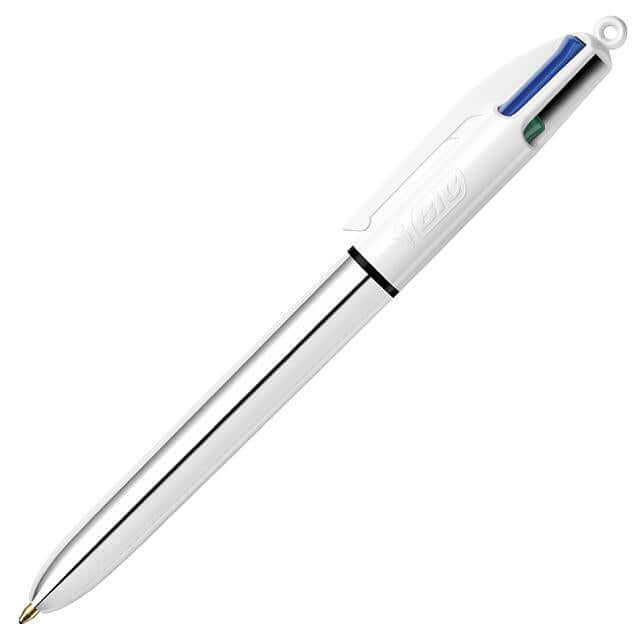
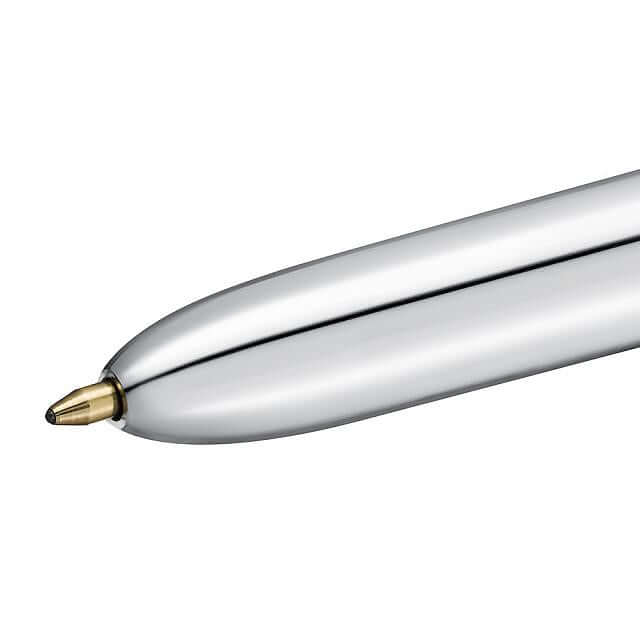
Fisher Space Pen Original Astronaut Space Pen Chrome
Let's get the famous story out of the way first. Everyone 'knows' that ballpoints didn't work in space, without gravity, so the Americans spent millions of dollars to develop a special pressurised ballpoint that did work in space. The Russians just used a pencil. Well, not really.
The Americans and Russians both used pencils. Paul Fisher, an inventer and pen maker, developed the pressurised refill, creating the 'Space Pen'. Then both the Americans and the Russians bought them from him and used them in space. Graphite is conductive, so snapped off bits of lead were considered a bit of a safety hazard floating around in a space capsule, so they were glad of a good alternative.
Oh, and standard ballpoint pens do work, and astronauts do sometimes use them, they're just not as reliable in zero gravity and extreme temperatures.
But Paul Fisher's Space Pen was reliable in these conditions, which makes it useful in all sorts of conditions, not just in space. They'll write better on damp paper, and greasy or dusty paper. They'll cope better in freezing conditions or excessively warm conditions. They have a much longer shelf life than standard ballpoints, too. They're just more reliable here on Earth, as well as in space.
The AG7 is the original Astronaut's pen, as supplied to NASA, and used on the moon missions in 1969. It's been used on Apollo and Shuttle missions, on the ISS, and on Soyuz, MIR and ARIANE missions. It's a simple and practical pen, with a good weight to it. The tip extends with a push of the end button, while the side button retracts it easily.
130mm long, 9mm wide, 7.5mm at grip.
Original: $121.68
-65%$121.68
$42.59Product Information
Product Information
Shipping & Returns
Shipping & Returns
Description
Let's get the famous story out of the way first. Everyone 'knows' that ballpoints didn't work in space, without gravity, so the Americans spent millions of dollars to develop a special pressurised ballpoint that did work in space. The Russians just used a pencil. Well, not really.
The Americans and Russians both used pencils. Paul Fisher, an inventer and pen maker, developed the pressurised refill, creating the 'Space Pen'. Then both the Americans and the Russians bought them from him and used them in space. Graphite is conductive, so snapped off bits of lead were considered a bit of a safety hazard floating around in a space capsule, so they were glad of a good alternative.
Oh, and standard ballpoint pens do work, and astronauts do sometimes use them, they're just not as reliable in zero gravity and extreme temperatures.
But Paul Fisher's Space Pen was reliable in these conditions, which makes it useful in all sorts of conditions, not just in space. They'll write better on damp paper, and greasy or dusty paper. They'll cope better in freezing conditions or excessively warm conditions. They have a much longer shelf life than standard ballpoints, too. They're just more reliable here on Earth, as well as in space.
The AG7 is the original Astronaut's pen, as supplied to NASA, and used on the moon missions in 1969. It's been used on Apollo and Shuttle missions, on the ISS, and on Soyuz, MIR and ARIANE missions. It's a simple and practical pen, with a good weight to it. The tip extends with a push of the end button, while the side button retracts it easily.
130mm long, 9mm wide, 7.5mm at grip.