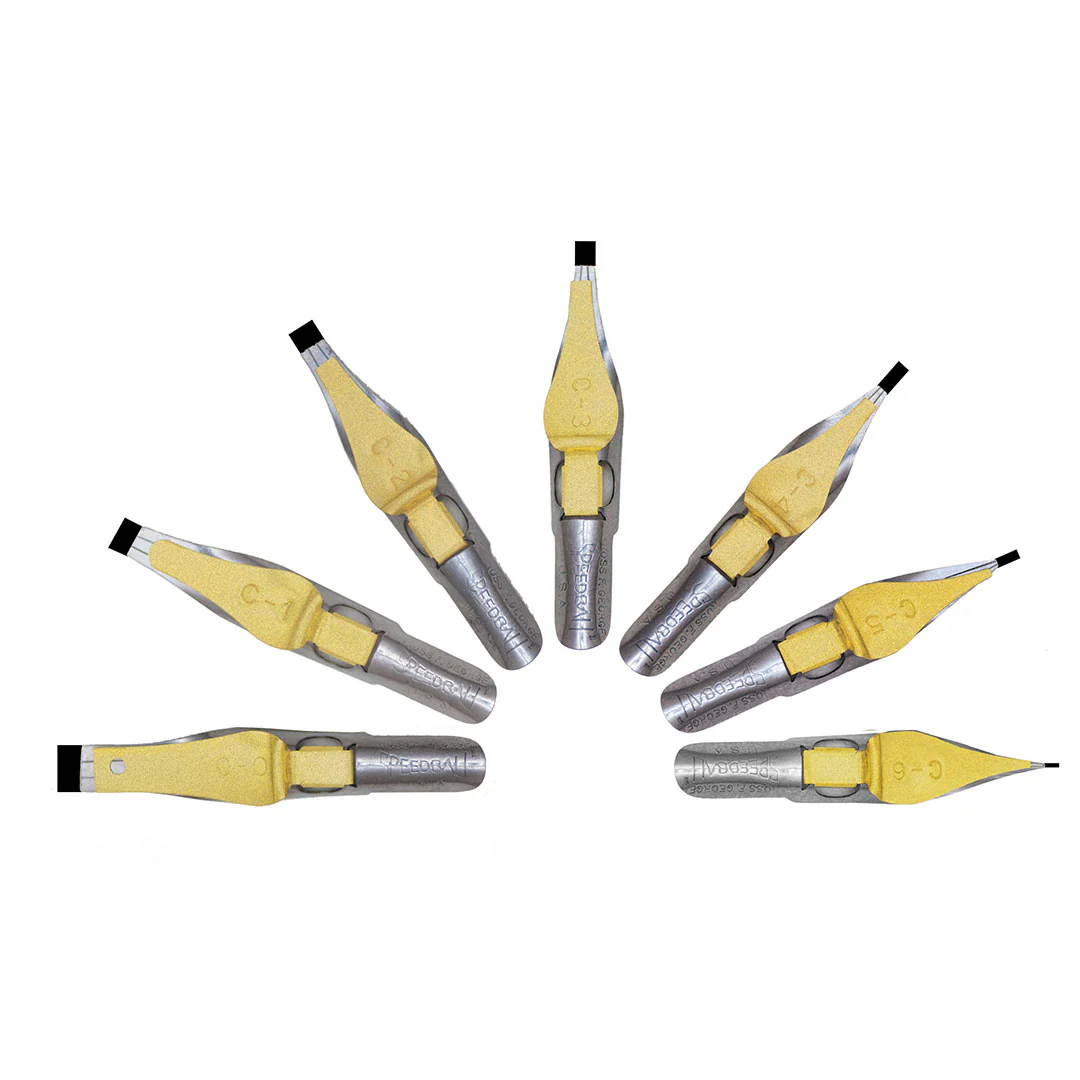
Speedball A-C Series Pen Nibs
Speedball steel nibs, suitable for use with any straight/classic style nib holders.
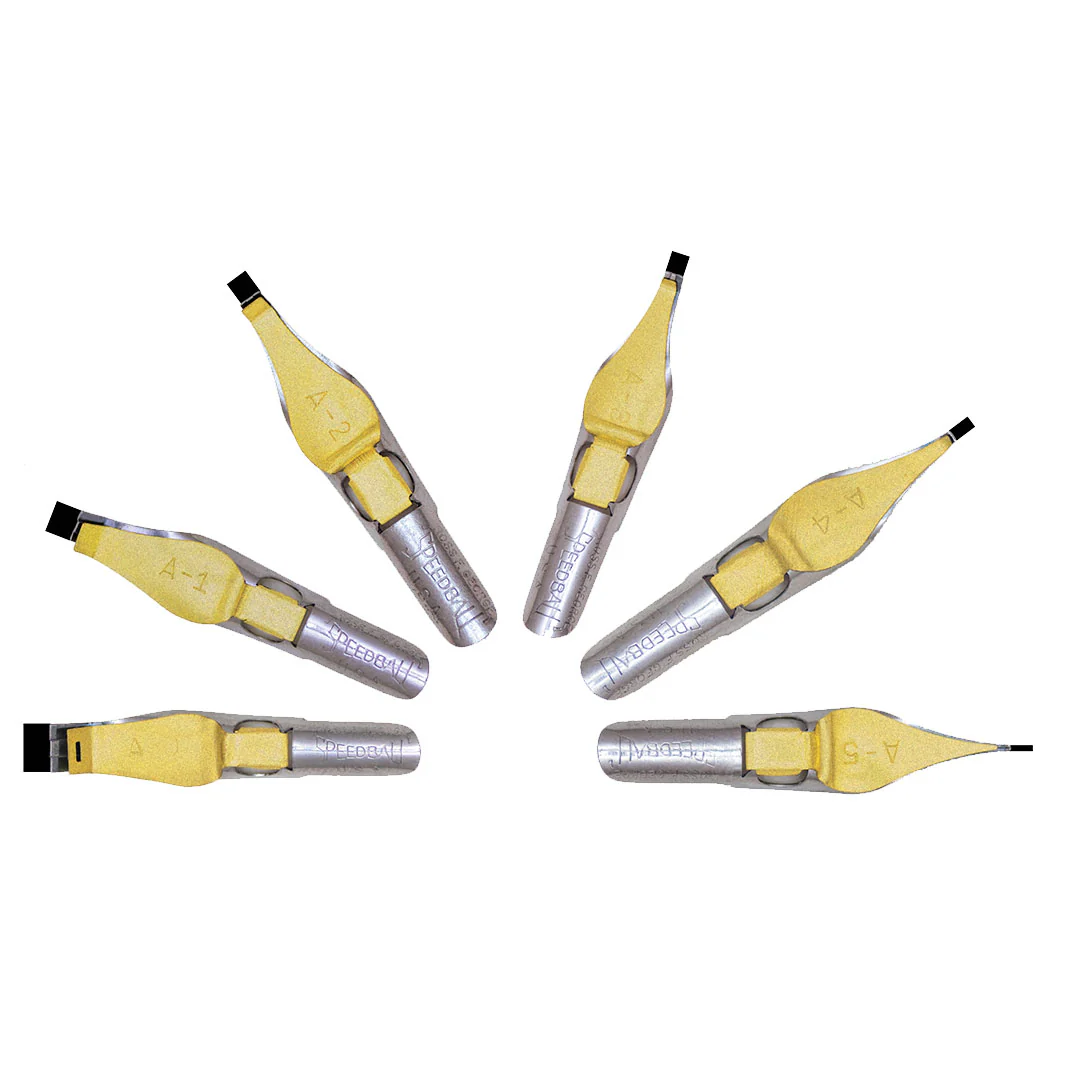
The A-series nib was patented in 1913 and introduced to themarket two years later. Its unique multi-purpose design allows artists to create a variety of strokes and is ideal for any Gothic or Monoline lettering style that has lines of uniform width with a squared finish.
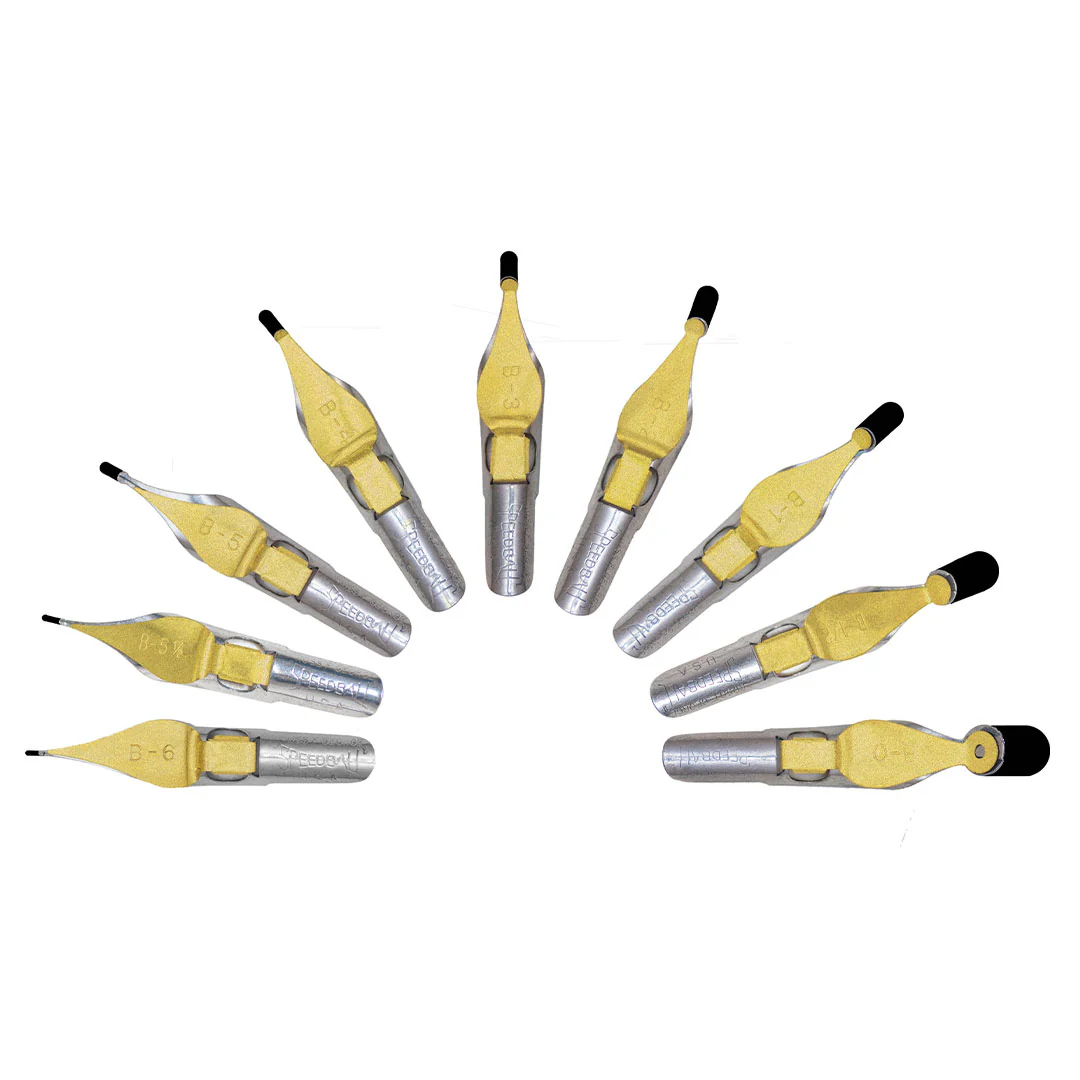
The B-series nib was launched in 1916. Like the A-series, the B-series has a bent end to form a 'shoe' that produces a uniform width line, but it has a rounded finish that makes it ideal for creating sans serif letters without thick and thin lines. The B-series is perfect for creating a variety of monoline lettering, drawn letters (e.g. Versals), and 'built-up' letters such as the Double Stroke Poster Roman.
The C-series was introduced in 1918. It features a traditional broad edge with a great degree of flexibility and is the most popular of the three broad edge offerings. It's meant to be held at a constant angle throughout, with minor variations needed depending upon the lettering style. This consistent angle gives the lettering artist the desired thick and thin strokes usually associated with broad edge calligraphy.
Original: $5.41
-65%$5.41
$1.89Product Information
Product Information
Shipping & Returns
Shipping & Returns
Description
Speedball steel nibs, suitable for use with any straight/classic style nib holders.
The A-series nib was patented in 1913 and introduced to themarket two years later. Its unique multi-purpose design allows artists to create a variety of strokes and is ideal for any Gothic or Monoline lettering style that has lines of uniform width with a squared finish.
The B-series nib was launched in 1916. Like the A-series, the B-series has a bent end to form a 'shoe' that produces a uniform width line, but it has a rounded finish that makes it ideal for creating sans serif letters without thick and thin lines. The B-series is perfect for creating a variety of monoline lettering, drawn letters (e.g. Versals), and 'built-up' letters such as the Double Stroke Poster Roman.
The C-series was introduced in 1918. It features a traditional broad edge with a great degree of flexibility and is the most popular of the three broad edge offerings. It's meant to be held at a constant angle throughout, with minor variations needed depending upon the lettering style. This consistent angle gives the lettering artist the desired thick and thin strokes usually associated with broad edge calligraphy.